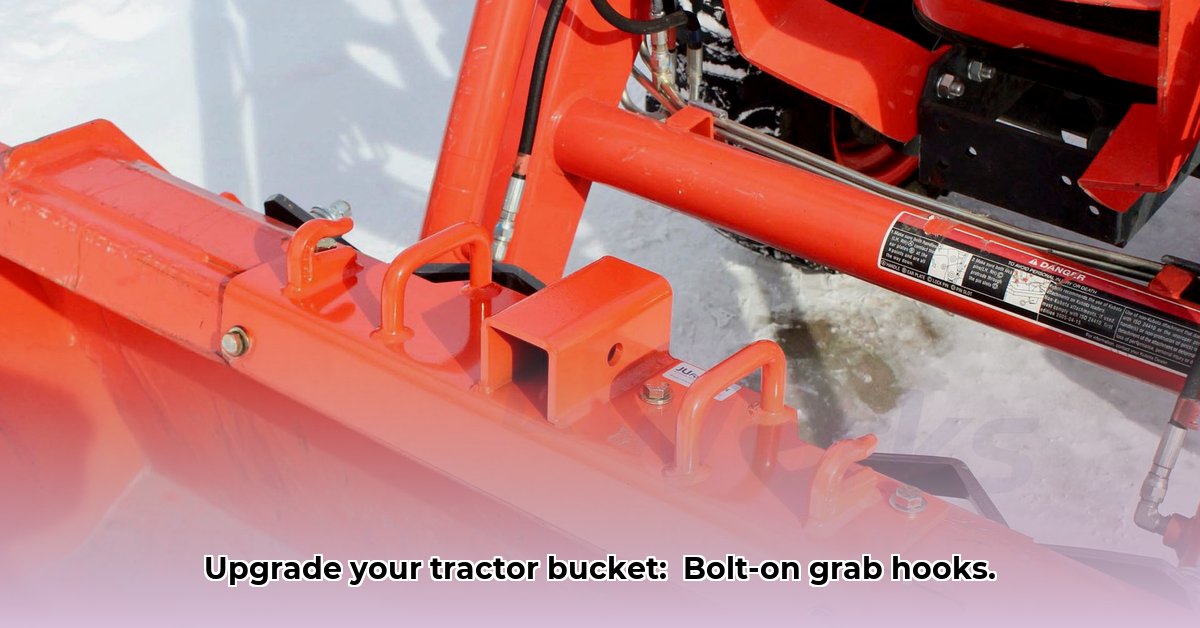
Choosing the right bolt-on grab hook for your tractor bucket is crucial for safety and efficiency. This guide provides a practical approach to selecting, installing, and maintaining these essential attachments, ensuring your farm operations run smoothly. For more in-depth information on tractor attachments, check out this helpful resource: Tractor Attachments Guide.
Understanding Bolt-On Grab Hooks
Bolt-on grab hooks are vital for attaching loads to your tractor bucket, simplifying the handling of heavy materials like hay bales, logs, or rocks. Selecting the appropriate hook ensures safe and efficient operation. The wrong choice, however, can lead to accidents or damage.
Types of Bolt-On Grab Hooks
Several factors influence hook suitability. Material significantly impacts strength and durability. Grade 70 steel (a high-strength alloy steel) is a popular choice due to its exceptional strength and longevity. Other grades of steel offer varying strengths and price points. Hook design affects performance as well. Forged hooks (shaped from a single piece of metal) tend to be stronger and more durable than welded hooks. Always check the weight capacity rating; this indicates the maximum safe weight the hook can lift.
| Hook Type | Material | Strength | Pros | Cons |
|---|---|---|---|---|
| Forged Grade 70 | Grade 70 Steel | Very High | Exceptionally strong and durable; high load capacity | More expensive than welded hooks. |
| Welded | Mild Steel | Moderate | More affordable; readily available. | Lower strength and durability than forged hooks; shorter lifespan. |
| Forged Mild Steel | Mild Steel | Moderate to High | Good balance of strength and price; readily available. | May not be as strong as Grade 70 for heavy lifting. |
Installing Your Bolt-On Grab Hooks: A Step-by-Step Guide
Safety is paramount. Before installation, ensure the bucket is securely attached to your tractor and the tractor is parked on level ground. Always refer to the manufacturer's instructions for your specific hook model, which supersede these generic guidelines.
- Preparation: Inspect the bucket mounting points for damage. Replace any damaged parts before proceeding.
- Alignment: Align the hook with the mounting holes. Precise alignment is essential for a secure fit.
- Bolt Insertion: Insert the bolts and tighten them by hand.
- Tightening: Use a wrench to tighten bolts evenly. Avoid over-tightening.
- Final Inspection: Check for secure attachment; any movement indicates improper installation.
Selecting the Right Hook: A Decision Tree
Hook selection depends on several factors, including bucket size, design, and the types of materials handled. Heavier duty buckets often require higher weight capacity hooks. Consider your usual load weights and give yourself a safety margin. Experts often recommend choosing a hook with a slightly higher capacity than what's regularly needed.
| Load Weight (lbs) | Hook Type | Number of Hooks | Material Grade |
|---|---|---|---|
| <500 | Single Center | 1 | Grade 5 |
| 500-1000 | Single or Double | 1 or 2 | Grade 70 |
| >1000 | Double or Triple | 2 or 3 | Grade 70 |
Maintenance and Safety: Ensuring Long-Term Performance
Regular inspection is vital. Before each use, check for wear, cracks, bends, or damage. Replace any damaged hook immediately. Store hooks in a dry place, away from extreme temperatures and moisture. Never exceed the stated weight capacity.
Market Overview: Domestic Manufacturing and Demand
Demand for durable, domestically manufactured bolt-on grab hooks is growing. Many farmers prioritize American-made parts, particularly for safety-critical equipment. While precise market data is limited, the demand suggests a strong and potentially expanding sector.
Conclusion: Prioritizing Safety and Efficiency
Selecting and installing the right bolt-on grab hooks is essential for safe and efficient agricultural operations. Careful selection, proper installation, and regular maintenance will ensure your equipment performs reliably for years to come. Always prioritize safety; never exceed the stated weight capacity of your hook.
Resources
- Example Resource 1: Link to a reputable manufacturer
- Example Resource 2: Link to agricultural equipment guide